
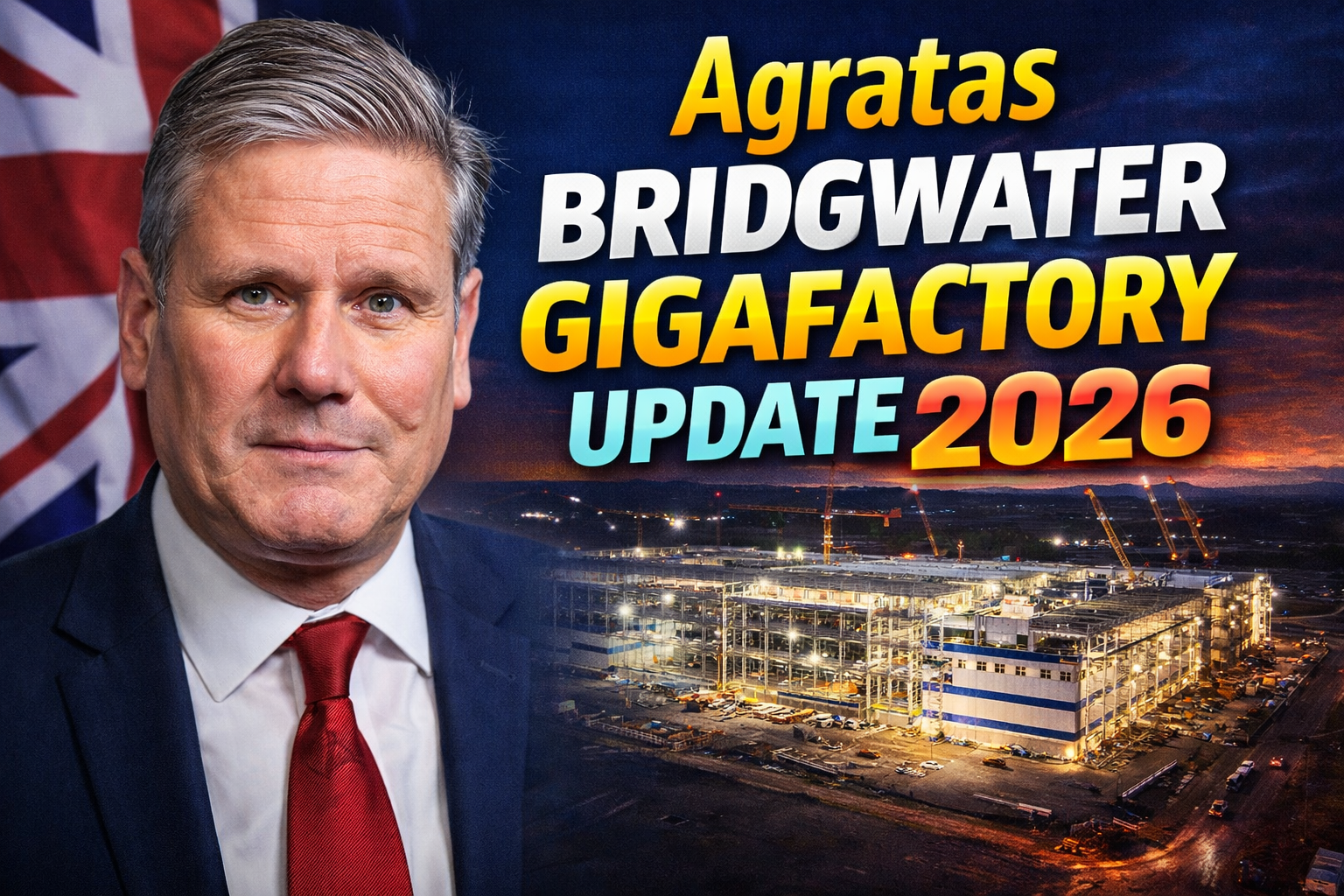
The Agratas Gigafactory in Bridgwater stands as a beacon of Britain’s green revolution, transforming a former military site into the heart of advanced battery production. Tata Group’s ambitious project promises to power the nation’s electric vehicle future while injecting billions into Somerset’s economy. As of early 2026, construction has hit remarkable strides, with the steel frame now complete and thousands of jobs on the horizon.
This multi-billion-pound endeavor at the Gravity Smart Campus in Puriton is more than a factory—it’s a catalyst for sustainable manufacturing. Local communities buzz with anticipation as the site evolves from leveled earth to a towering industrial powerhouse. Somerset, long rooted in agriculture and traditional industries, now eyes a high-tech renaissance driven by clean energy demands.
Project Origins and Strategic Location
Agratas, Tata’s global battery arm, selected Bridgwater for its ideal blend of space, infrastructure, and skilled workforce proximity. The 308-acre site, once home to a Royal Ordnance Factory, was reborn as an Enterprise Zone in 2017 under Gravity Ltd. Tata swooped in during 2024, envisioning a facility to rival Europe’s largest battery plants.
Phased development ensures steady momentum. Building One kicked off with test piling in spring 2024, full piling by summer, and main construction in autumn. The site’s flat terrain and access to major motorways like the M5 streamline logistics, while nearby ports handle raw material imports. Powered entirely by renewables—including on-site solar and wind—this gigafactory aligns with Tata’s net-zero pledge, drawing clean electricity to fuel battery cell production for EVs and energy storage.
Bridgwater’s location bridges urban talent pools in Bristol and rural affordability, making it a magnet for workers. Early site prep leveled over 40 percent of the land and drove 17,000 foundation piles deep into Somerset soil, setting a robust base for what will span millions of square feet.
Construction Milestones Achieved So Far
February 2026 marks a pivotal moment: the primary steel frame for the main manufacturing hall stands complete. Over 500 workers orchestrated this feat, erecting beams sourced entirely from British steel mills. Sir Robert McAlpine, the lead contractor, partnered with Severfield for steelwork and Stantec for engineering, achieving this in under six months despite the structure’s immense scale.
Massive 100-tonne cranes dotted the skyline as steel deliveries rolled in, assembling the first frames by mid-2025. Steelwork progressed to two-thirds completion late last year, with cladding now underway. Roofing installation and internal fit-outs follow swiftly, targeting substantial completion by late 2026. Drones and digital twins—virtual replicas of the build—have accelerated progress, minimizing errors in this complex endeavor.
Challenges like weather delays and supply chain hiccups tested the team, but innovative modular techniques kept timelines intact. Over 2,000 construction workers will peak on-site this year, a hive of welders, electricians, and engineers transforming blueprints into reality. Aerial views reveal a sprawling campus with rail spurs for battery shipments and vast clean rooms for cell assembly.
Key construction phases unfold as follows:
| Phase | Start Date | Key Activities | Completion Target |
|---|---|---|---|
| Site Preparation | Early 2024 | Land leveling, piling (17,000 piles) | Mid-2024 |
| Steel Frame Erection | Summer 2025 | UK-sourced steel, crane assembly | February 2026 |
| Cladding and Roofing | Early 2026 | Weatherproofing, structural enclosure | Mid-2026 |
| Internal Fit-Out | Late 2026 | Clean rooms, machinery install | Early 2027 |
| Phase One Production | Late 2027 | Battery cell trials for JLR | 2028 Ramp-Up |
This table underscores the precision engineering propelling the project forward.
Job Creation Boom and Economic Ripple Effects
The gigafactory heralds an unprecedented jobs surge for Somerset. Direct employment will hit 4,000 high-skill roles upon full operation, spanning engineers, chemists, and automation specialists. Construction alone employs thousands temporarily, with peaks at 2,000 this year. Indirect jobs in supply chains, logistics, and services could double that figure, injecting vitality into local towns like Highbridge and Burnham-on-Sea.
Average salaries eclipse regional norms, with operators starting at competitive rates and executives drawing top talent from across Europe. Tata commits to robust training: partnerships with Bridgwater & Taunton College offer apprenticeships in electrochemistry and robotics. Over 1,000 local hires are already pledged, prioritizing Somerset residents through job fairs and outreach.
Economically, the project values at £4 billion, promising £1 billion in annual output by 2030. Somerset Council’s enterprise zone status waives business rates initially, spurring growth. Local businesses—from cafes catering worker lunches to suppliers of safety gear—report early windfalls. Housing demand spikes, with developers fast-tracking affordable units near Puriton.
A breakdown of projected jobs highlights the diversity:
| Job Category | Number of Roles | Skill Focus | Annual Salary Range |
|---|---|---|---|
| Manufacturing Operators | 2,500 | Assembly, quality control | £30,000–£45,000 |
| Engineers (Chemical, Mechanical) | 800 | R&D, process optimization | £50,000–£80,000 |
| Logistics and Supply Chain | 400 | Shipping, inventory | £35,000–£55,000 |
| Support (HR, IT, Maintenance) | 300 | Admin, cybersecurity | £28,000–£60,000 |
| Construction (Peak) | 2,000 | Welding, electrical | £25,000–£50,000 |
These positions cement Bridgwater as a green tech hub, rivaling battery clusters in Germany and France.
Technological Innovations and Sustainability Focus
Inside the gigafactory, cutting-edge tech drives efficiency. Lithium-iron-phosphate cells, safer and longer-lasting than rivals, target Jaguar Land Rover as the anchor client, with Tata Motors next. Annual capacity ramps to 40GWh—enough for 500,000 EVs—positioning it as Europe’s largest by decade’s end.
Renewable integration shines: on-site plants generate 100 percent clean power, slashing emissions. Water recycling systems and zero-waste protocols align with circular economy principles. Robotics automate 70 percent of production, from electrode coating to final packing, boosting precision and safety.
Stantec’s design incorporates modular expansions for future phases, allowing scalability without downtime. Digital construction tools like BIM (Building Information Modeling) cut costs by 15 percent, a boon for taxpayers via government grants.
Community Engagement and Local Impacts
Somerset communities embrace the transformation. Public consultations shaped traffic plans, easing M5 concerns. Agratas funds highway upgrades and a worker campus with housing, gyms, and shuttle services. Environmental safeguards include bat habitats and noise buffers, earning green credentials.
Schools integrate battery tech into curricula, with field trips to the site. WEAF (West of England Aerospace Forum) hosts updates, fostering supplier networks. Residents note positives: reduced unemployment, bustling high streets, and a youthful influx revitalizing pubs and shops.
Challenges persist—traffic congestion during peak builds—but mitigation like carpool incentives helps. Long-term, the gigafactory elevates Somerset’s global profile, drawing investment in renewables and advanced manufacturing.
Future Timeline and Production Ramp-Up
Phase One opens late 2027, with full site maturity in the early 2030s. Initial output supplies JLR’s electric Defender and Discovery, scaling to exports. Expansions could double capacity, serving aviation and grid storage.
Government backing via the Modern Industrial Strategy underscores national stakes. Industry Minister Chris McDonald hailed the steel milestone as proof of UK manufacturing prowess. Agratas eyes 2030 full capacity, churning cells for a million vehicles yearly.
Broader Implications for UK Green Energy
This gigafactory anchors Britain’s battery supply chain, reducing reliance on Asia. It supports net-zero by 2050, powering EVs amid rising demand—UK sales topped two million last year. Somerset gains a legacy asset, blending Tata’s Indian innovation with British engineering.
As cladding encases the steel skeleton, excitement builds. The Agratas Bridgwater Gigafactory isn’t just bricks and batteries; it’s Somerset’s gateway to a electrified tomorrow, creating jobs, wealth, and a cleaner planet for generations.

Nikhita Jose is a journalist and content writer covering local news, community affairs, and public interest stories in Somerset. She focuses on clear, accurate reporting and brings a thoughtful, reader-first approach to regional journalism.