
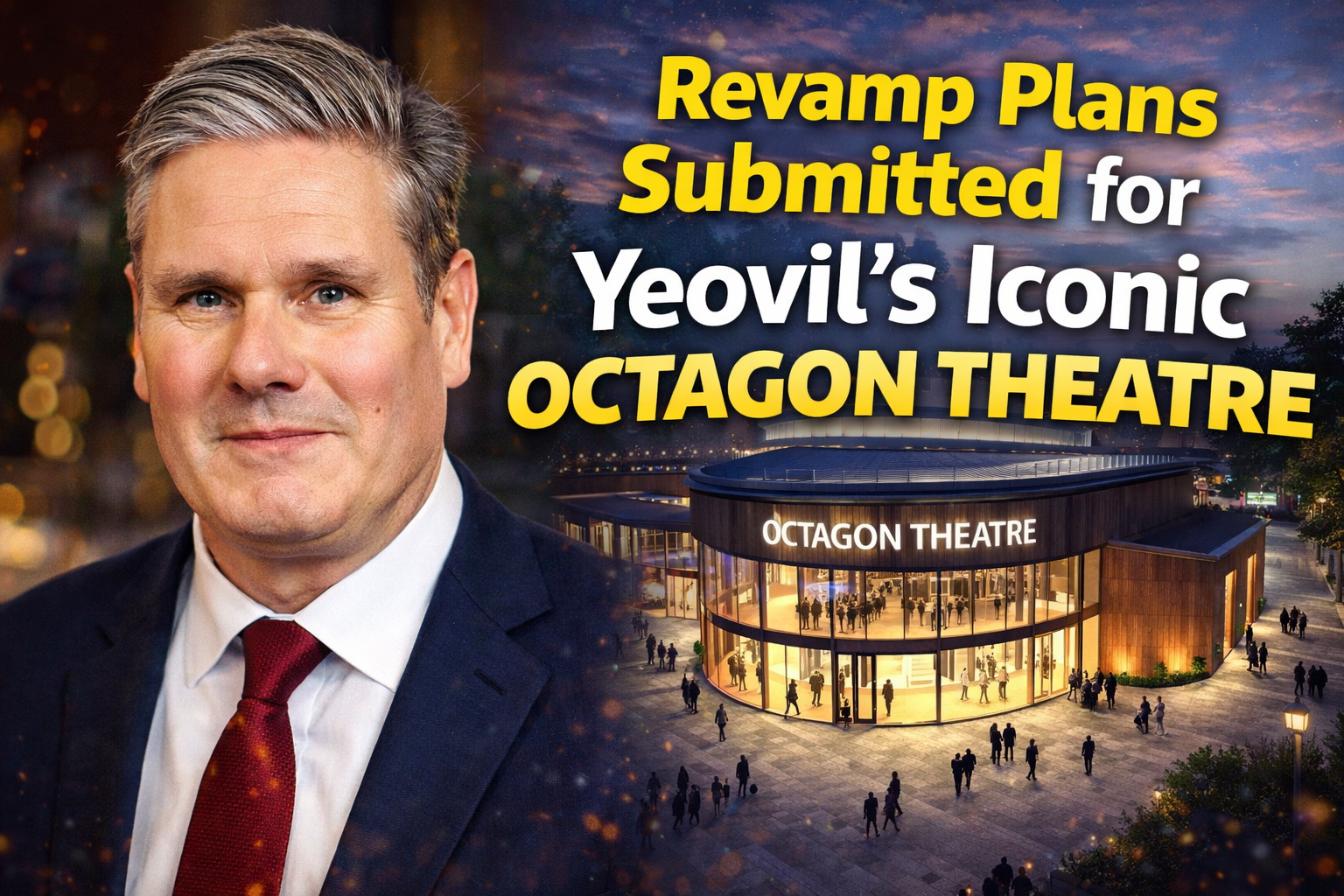
Yeovil Town Council has submitted ambitious £15 million revamp plans for the Octagon Theatre, the town’s cultural cornerstone since 1974, aiming to modernise facilities while preserving its distinctive eight-sided Brutalist architecture. The proposals, lodged with South Somerset District Council on 20 December 2025, include expanded seating, state-of-the-art acoustics, and community spaces to secure the venue’s future amid funding pressures. Local stakeholders hail the initiative as vital for Yeovil’s regeneration, positioning the theatre as a regional arts hub.
Architectural Legacy of the Octagon Theatre
Opened by HRH The Duke of Edinburgh amid fanfare, the Octagon Theatre was designed by architects Crease & Co. as Yeovil’s civic centrepiece, seating 800 across stalls and circles within its namesake octagonal auditorium. The Brutalist structure, with exposed concrete and geometric form, reflects 1970s optimism, hosting stars from Laurence Olivier to modern touring productions. Its proscenium stage and fly tower supported diverse programming, from pantomimes to symphony orchestras.
Over five decades, the venue weathered economic shifts, including post-2008 austerity cuts that strained operations. Recent structural surveys identified outdated electrics, asbestos risks, and accessibility barriers, prompting urgent intervention. The revamp respects Grade II heritage status, retaining the octagonal shell while upgrading internals—a balance praised by Historic England.
Yeovil’s theatre scene thrives on community involvement, with the Octagon Players amateur group performing annually. The plans ensure this legacy endures.
Key Features of the Proposed Revamp
The submission outlines a comprehensive overhaul led by architects Feilden Clegg Bradley Studios, known for sustainable cultural projects. Core upgrades include:
- Expanded Auditorium: Reconfigured raking increases capacity to 950, with improved sightlines via tiered seating and retractable orchestra pit.
- Acoustic Enhancement: Bespoke panels and computer-modeled sound diffusion rival national venues, benefiting orchestras and spoken word.
- Backstage Modernisation: New dressing rooms, green rooms, and loading bay accommodate larger tours, with gender-neutral facilities.
- Foyer and Front-of-House: Glass extensions create welcoming atrium with café-bar, box office, and education studios overlooking the Glovers Walk precinct.
- Accessibility Overhaul: Lifts, hearing loops, and autism-friendly zones ensure inclusivity.
Sustainability drives the design: solar panels, LED lighting, and rainwater harvesting target net-zero by 2035, aligning with Somerset’s green agenda.
The following table details major components:
| Component | Current State | Proposed Upgrade | Capacity/Size Gain |
|---|---|---|---|
| Auditorium Seating | 800 fixed | 950 flexible, improved rake | +19% |
| Foyer/Bar | Limited pre-show space | 500sqm atrium with mezzanine | Doubled area |
| Backstage | 8 dressing rooms, basic fly | 16 rooms, automated rigging | +100% facilities |
| Education Spaces | Minimal | 3 studios for 200 users weekly | New provision |
| Sustainability | Gas heating, poor insulation | Solar, heat pumps, BREEAM Excellent | 60% carbon reduction |
Funding Strategy and Economic Rationale
The £15 million budget breaks down as £8 million from Arts Council England capital grants, £4 million Yeovil Town Council borrowing (backed by increased ticket levies), £2 million National Lottery Heritage Fund, and £1 million private sponsorships from local firms like AgustaWestland. Phased delivery minimises disruption: Phase 1 (foyer/backstage) by 2027, Phase 2 (auditorium) by 2029.
Economically, the revamp promises £25 million annual injection via tourism, jobs (50 full-time post-refurb), and supply chains. Yeovil’s high street, suffering 25% vacancy, benefits from theatre-linked footfall. Council leader Simon Dibble links it to Levelling Up bids, complementing the £40 million Glovers Walk redevelopment.
Risks include construction inflation, mitigated by fixed-price contracts and contingency funds.
Community and Cultural Impact
The Octagon anchors Yeovil’s cultural calendar, staging 300+ events yearly: West End tours, youth pantos, and South Somerset Musical Theatre Society productions. Revamp plans expand outreach with free workshops, school residencies, and digital streaming for rural audiences.
Local groups like Yeovil Literary Society endorse expanded studio spaces for readings and rehearsals. Accessibility upgrades address criticisms from disabled patrons, while family zones support intergenerational engagement.
Somerset-wide, it bolsters the county’s arts offer alongside Taunton’s Brewhouse and Bridgwater’s Arts Centre, fostering touring economies.
Stakeholder Reactions and Consultations
Public consultation from March-October 2025 drew 2,500 responses, 92% supportive. Octagon Theatre Trust director Mark Smith welcomed «future-proofing,» noting outdated tech deterred promoters. «We’ve punched above our weight; this elevates us to sub-regional status,» he said.
Conservationists, led by Georgian Group, secured heritage clauses preserving external concrete fins. Yeovil Chamber of Commerce projects 15% hospitality uplift.
Opposition Conservatives abstained on funding but praised ambition, urging private sector involvement. Greens pushed for bolder green credentials.
Planning Process and Timeline
South Somerset planners target determination by March 2026, with construction starting summer if approved. Temporary venue at Westlands Leisure Centre hosts programming during closures. Full reopening slated for October 2029, coinciding with the theatre’s 55th anniversary.
Challenges include traffic management on Hendford and noise mitigation for neighbours. Conditions likely mandate 20% affordable tickets and local hiring quotas.
The table outlines timeline:
| Milestone | Date Estimate | Key Activities |
|---|---|---|
| Planning Decision | March 2026 | Public inquiry if objections |
| Phase 1 Start | Summer 2026 | Foyer demolition/extension |
| Phase 1 Complete | December 2027 | Partial reopening |
| Full Closure | January 2028 | Auditorium works |
| Grand Reopening | October 2029 | Gala with royal patron |
Architectural and Heritage Considerations
Feilden Clegg’s design sensitively extends the 1970s envelope with sympathetic brickwork and glazing, maintaining the octagon’s silhouette. Internal demolitions focus on non-structural partitions, preserving Peter Black’s original lighting grid. Heritage officers approve the approach, likening it to successful Brutalist updates at Sheffield’s Crucible.
Public realm enhancements include landscaped plaza linking to Preston Road retail park, boosting connectivity.
Broader Regeneration Context
The Octagon forms Yeovil Vision’s centrepiece, alongside £100 million town investment: leisure centre rebuild, station upgrades, and enterprise zones. Amid Leonardo Helicopters’ local footprint, cultural upgrades attract skilled workers. Somerset Council’s unitary authority transition integrates plans seamlessly.
A Bold Step for Yeovil’s Cultural Revival
The revamp submission marks a pivotal moment for Yeovil, transforming a mid-20th-century icon into a 21st-century beacon. By blending heritage reverence with forward-thinking design, it promises enhanced experiences for generations. Approval would signal confidence in Somerset’s creative economy, ensuring the Octagon’s octagonal magic endures.
Residents and visitors await planners’ verdict, poised for a cultural renaissance in this West Country gem.
Nikhita Jose is a journalist and content writer covering local news, community affairs, and public interest stories in Somerset. She focuses on clear, accurate reporting and brings a thoughtful, reader-first approach to regional journalism.