
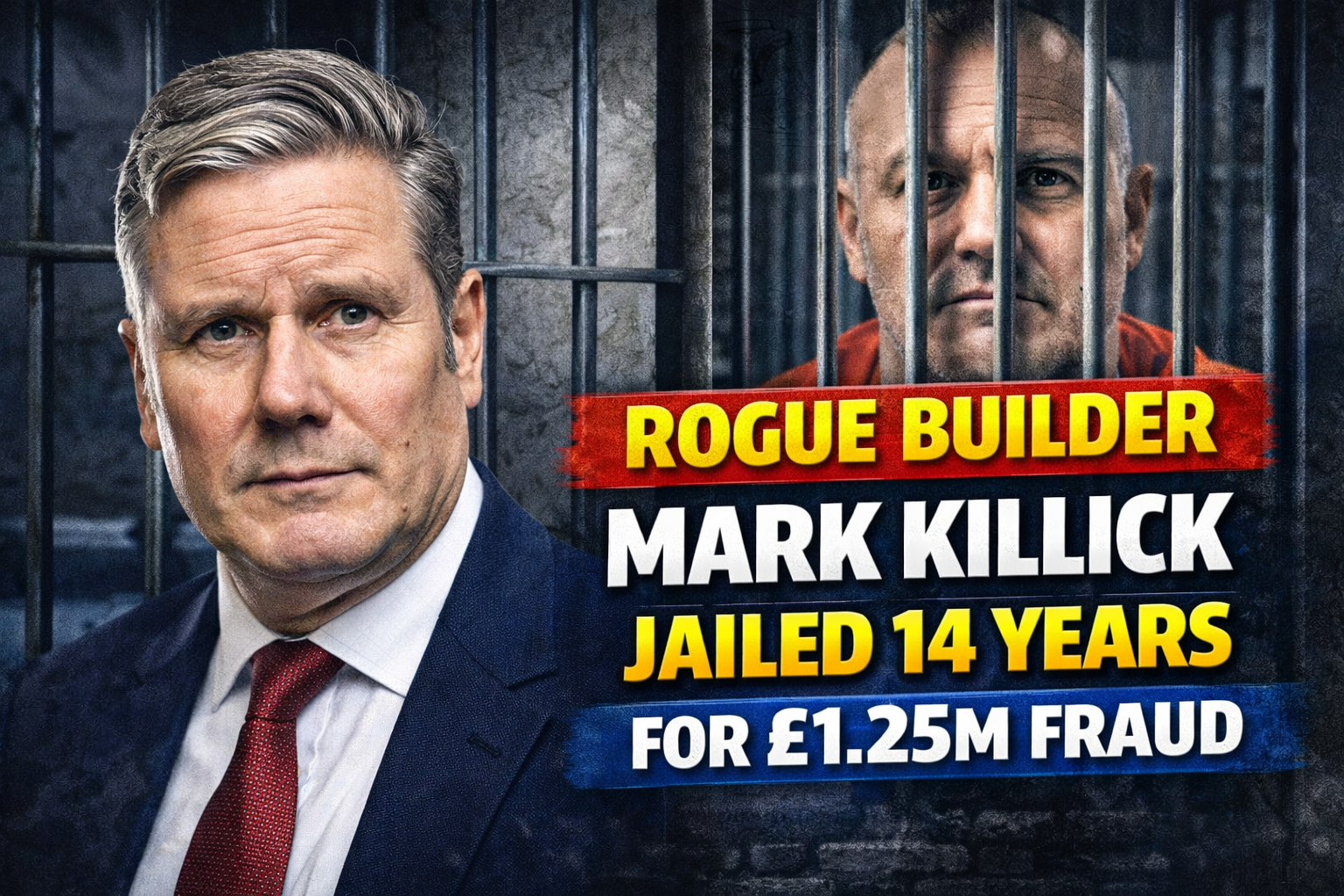
Mark Killick, a notorious cowboy builder from Paulton in Somerset, receives a fourteen-year prison sentence for defrauding thirty-seven customers out of over one point two five million pounds. Operating under aliases like Marc Cole and Mark Jenkins, he preyed on trusting homeowners during the pandemic building boom, taking huge upfront payments and leaving jobs unfinished or untouched. This conviction marks his fourth for fraud, exposing a decades-long pattern of deception that devastated families and fueled his lavish lifestyle.
The Scale of the Fraud
Killick’s operation, trading as TD Cole Ltd, ran from late two thousand nineteen through two thousand twenty-one, a period of high demand for home improvements amid lockdowns. He targeted homeowners across the West of England, promising professional renovations like kitchen extensions, loft conversions, and full builds with glossy websites and quick quotes. Customers handed over tens of thousands each—sometimes up to fifty-six thousand pounds—for materials and labor that never materialized, creating a Ponzi-like scheme where new payments funded old promises or vanished into personal spending.
Over one hundred complaints flooded Avon and Somerset Police and Trading Standards, leading to forty-six charges of fraud by false representation. A jury at Bristol Crown Court convicted him on thirty-seven counts after a grueling fourteen-week trial, acquitting one and deadlocking on eight. Prosecutors detailed how he solicited urgent payments, claiming suppliers needed immediate funds, only to order nothing or deliver shoddy starts before vanishing. The total customer outlay hit one point four seven million pounds, with unfinished work valued at one point two seven million, equivalent to a lottery jackpot in stolen dreams.
Victims described homes wrecked—demolished outbuildings without rebuilds, half-dug foundations exposed to weather, and interiors gutted into hazardous shells. Judge Moira MacMillan branded the damage «truly shocking,» noting ongoing harm from unsafe structures forcing relocations and extra costs. Killick’s charm masked the scam: he responded fast to inquiries, charmed with site visits, then strung along with excuses like material shortages or worker illnesses.
Victim Stories and Lasting Impact
Homeowners shared harrowing tales in court, painting a gallery of betrayal. One family paid fifty-six thousand for a kitchen extension, receiving only demolition and basic footings; calls to «suppliers» revealed no orders existed. Another couple lost tens of thousands on a loft conversion, left with gaping holes and no progress after months of payments. Frances Hatfield, among many, felt rushed into transfers, watching her savings evaporate while Killick dodged contact.
Emotional scars ran deep: families faced financial ruin, borrowing to fix messes or selling properties at loss. Some endured mental health crises, anxiety from living in dilapidated homes, or marital strains over debts. Elderly victims, lured by promises of accessible adaptations, suffered most, unable to afford repairs on fixed incomes. Personal statements underscored «serious and ongoing» suffering, with children displaced and holidays canceled amid chaos.
Communities reeled too, as word spread of the «serial fraudster,» eroding trust in local tradesmen. Many pursued civil claims, but recovery proved elusive, with Proceeds of Crime efforts ongoing to claw back assets.
Killick’s Lavish Lifestyle and Excuses
Prosecutors unveiled Killick’s spending spree, contradicting his «honest business» claims. A fifty-thousand-pound Covid bounce-back loan vanished into a twenty-five-thousand-pound Rolex Submariner watch, dubbed a «business asset.» Funds flowed to gambling, luxury resort stays framed as client meetings, and high-end travel. Bank records showed transfers through personal and wife’s accounts, obscuring trails amid business failures.
Arrested in November two thousand twenty-one at his Somerset home, Killick remained unfazed on video, later blaming the pandemic, fuel strikes, a car accident, and even England’s Euros success for disruptions. He insisted a new venture, Cole Design, would finish jobs post-release, but evidence showed no intent—new contracts masked old defaults. In appeals, he sought to overturn the verdict, maintaining legitimacy, yet the jury saw through the facade.
Detective Charlotte Suter called him a «master of deception,» preying on pandemic eagerness unlike ethical builders. His ponzi mechanics sustained the illusion: fresh deposits paid prior victims minimally, buying time while pocketing the rest.
Criminal History and Previous Convictions
Killick’s rap sheet spans decades, originating from Neath in South Wales. A two thousand six twelve-year Bankruptcy Restriction Order barred him from credit over five hundred pounds without disclosure, breached repeatedly. He pleaded guilty to fraud in two thousand eight and two thousand nine under his name, then two thousand fourteen as Mark Jenkins—his grandfather’s name—scamming forty-two victims out of five hundred seventy-three thousand pounds.
That earlier case mirrored the latest: deposits taken, work abandoned, leading to prison. Six prior sentences, including magistrates’ court terms in the nineteen-nineties, cemented his recidivism. Despite bans, he reincarnated firms, dodging scrutiny with aliases and slick marketing.
This pattern alarmed authorities, prompting joint probes blending police forensics with Trading Standards’ consumer expertise. Over five years, thousands of evidence pages built the case, calling fifty-plus witnesses.
Court Proceedings and Sentencing
Bristol Crown Court hosted the marathon trial from summer into autumn two thousand twenty-five, with prosecutors James Tucker and Charlotte Evans dismantling defenses. Killick maintained limited remorse, accepting no liability despite overwhelming proof. On December twenty-second, Judge MacMillan imposed fourteen years, citing deliberate exploitation of boom times and victim multiplicity.
Additional penalties bite post-release: a five-year Serious Crime Prevention Order restricts aliases, bans construction profits, and mandates Marc Cole usage. A fifteen-year company director disqualification seals his trade exit. «You inflicted so much suffering,» she stated, rejecting pandemic pleas as every builder faced challenges.
Public galleries filled with victims witnessed closure, as handcuffs clicked amid flashbulbs. Appeals loom unlikely, given evidence weight.
Broader Implications for Consumers
Killick’s downfall spotlights rogue trader perils, especially in high-demand sectors like construction. Avon and Somerset Police urge due diligence: verify trader accreditations via TrustMark or Trading Standards, demand staged payments tied to milestones, and check reviews beyond fake sites. Contracts should detail timelines, costs, and cancellation rights.
| Red Flags of Rogue Builders | Legitimate Signs |
|---|---|
| Upfront demands exceeding 25% | Milestone payments post-progress |
| Pressure for urgent transfers | Written quotes with timelines |
| Vague or absent insurance proof | Membership in trade bodies |
| Slick sites sans real portfolios | Local references verifiable |
| Aliases or new firms frequently | Fixed company history |
This table equips wary homeowners, emphasizing small deposits first.
Awareness campaigns ramp up, with police apps mapping complaints and hotlines for tips. Post-Killick, Trading Standards tightens checks on bounce-back loans, curbing abuse.
Lessons from the Investigation
Avon and Somerset’s probe exemplifies multi-agency success: detectives traced finances, forensics linked sites, and Trading Standards decoded complaints. Over one hundred reports crystallized patterns, from identical excuses to shared bank patterns. Victim testimonies proved pivotal, humanizing stats into irrefutable harm.
Detectives like Louise Sinclair stressed early reporting: patterns emerge from clusters. Digital trails—emails, transfers—proved damning, underscoring paper trails’ power.
Protecting Yourself from Rogue Traders
Homeowners safeguard via basics: research firms on Companies House for director history, insist on references, and use approved schemers. Photograph sites pre-work, log payments, and halt if red flags wave. Neighbors sharing experiences build informal nets.
Insurance often covers fraud, but prevention trumps claims. Community forums now vet locals, sidelining suspects pre-hire.
Justice Served and Moving Forward
Killick’s jailing delivers catharsis, though scars linger for victims chasing restitution. Proceeds hunts target Rolexes and assets, promising partial returns. Somerset rebuilds trust, hailing ethical builders stepping into voids.
This saga warns: charm conceals crooks, vigilance vanquishes them. Families reclaim lives, fortified against future frauds, as justice’s long arm endures.

Nikhita Jose is a journalist and content writer covering local news, community affairs, and public interest stories in Somerset. She focuses on clear, accurate reporting and brings a thoughtful, reader-first approach to regional journalism.