
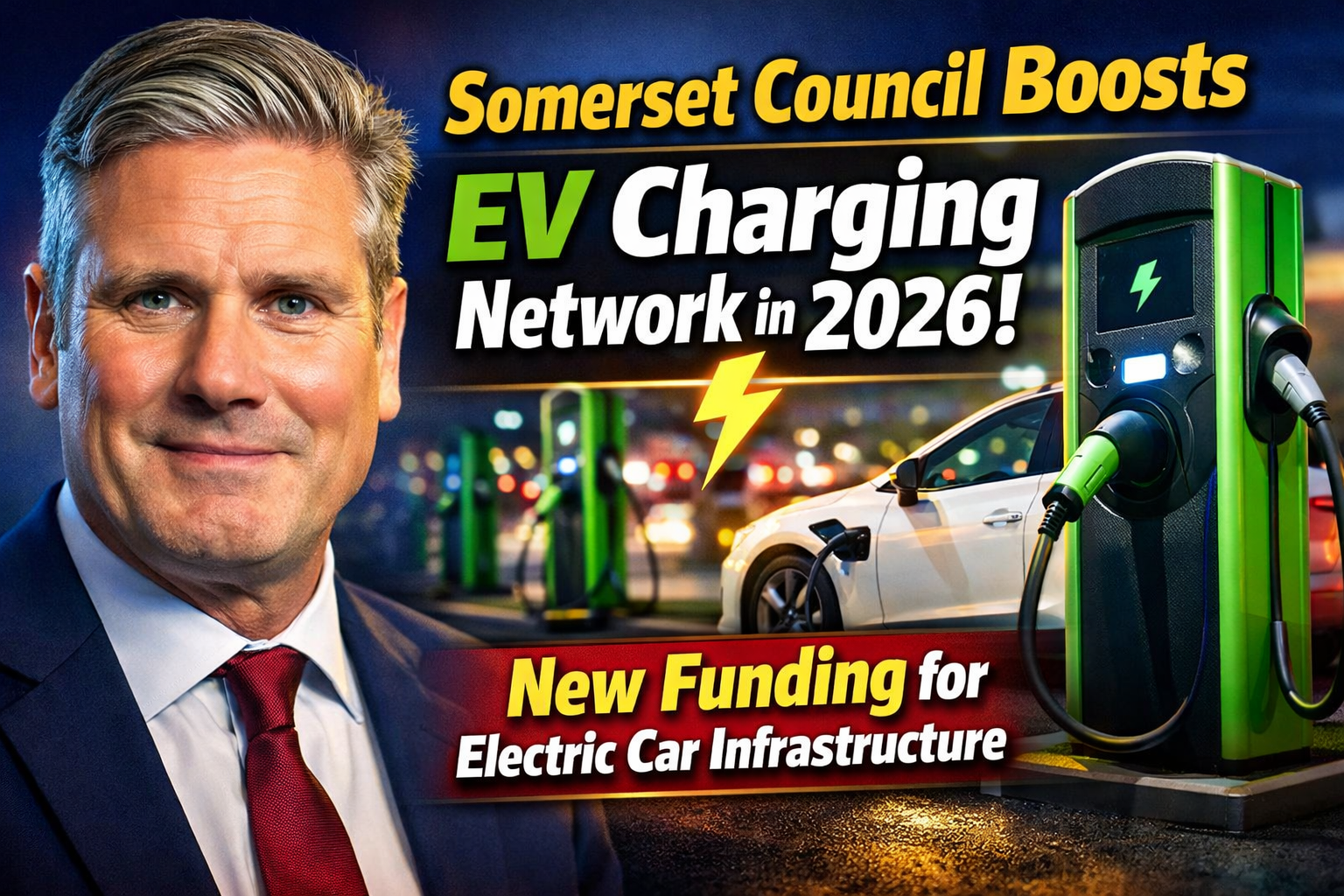
Somerset Council accelerates its transition to sustainable transport in 2026 through substantial government funding for electric vehicle charging infrastructure. The Local Electric Vehicle Infrastructure Fund delivers millions to install thousands of chargepoints, targeting residents without off-street parking and rural communities alike.
LEVI Fund Allocation and Scope
Somerset Council secures 3.78 million pounds from the government’s Local Electric Vehicle Infrastructure Fund, marking a pivotal investment in public charging networks. This capital funding supports planning and deployment of on-street and car park chargepoints across urban and rural areas.
The initiative prioritizes low-powered sockets up to 7kW, ideal for overnight charging, with a minimum delivery of 1,606 units. Operators commit to funding up to 20 rapid chargers exceeding 50kW, enhancing long-distance travel options within the county.
A 17-year concession contract ensures commercial viability, generating annual revenue for the council to offset administration costs. Procurement for the installation partner advances swiftly, with installations slated to ramp up throughout 2026.
Strategic Vision Behind the Expansion
Somerset’s Electric Vehicle Charging Strategy, adopted years ago, guides this rollout with a comprehensive action plan. It addresses the county’s rural character, electricity network constraints, and high proportion of homes without driveways.
Themes span leading by example through council fleet electrification, home and workplace charging incentives, destination points at supermarkets and leisure sites, and on-route fast chargers along major roads. The 2026 boost aligns with carbon neutrality goals, aiming for significant electric vehicle adoption by decade’s end.
Councillor Richard Wilkins emphasizes equitable access, ensuring rural areas receive at least a quarter of new infrastructure. This approach counters commercial operators’ reluctance to invest in lower-demand zones, fostering inclusive green mobility.
Targeting Somerset’s Unique Challenges
Around 27 percent of Somerset properties lack off-street parking, trapping many residents in reliance on petrol and diesel vehicles. On-street chargers bridge this gap, enabling overnight top-ups without home installations.
Rural communities face amplified barriers: sparse existing networks and longer travel distances demand reliable public options. The LEVI model leverages private operators for deployment while guaranteeing coverage in underserved spots.
Installation minimizes disruption by utilizing existing low-voltage street lighting cables, slashing costs and timelines. Community input via the council website shapes locations, prioritizing high-need streets and villages.
| Chargepoint Type | Power Level | Primary Use | Minimum Deployment |
|---|---|---|---|
| Low-Powered | Up to 7kW | Overnight, residential | 1,606 sockets |
| Rapid | 50kW+ | Quick stops, travel | Up to 20 units |
| On-Street | 3.5-7kW | Apartment dwellers | County-wide |
| Car Park | Mixed | Shoppers, workers | Key hubs |
Installation Process and Timeline for 2026
Procurement concludes early in the year, selecting a contractor for the full 17-year lifecycle including maintenance and operations. Rollout phases begin late spring, focusing initial clusters in Taunton, Bridgwater, and Yeovil before expanding outward.
Residents submit site suggestions online, with council teams assessing feasibility based on demand, grid capacity, and pavement space. Summer sees bulk low-powered installs, while rapid units target A-roads and motorway services by autumn.
Ongoing monitoring ensures uptime above 98 percent, with apps for locating free bays. The council gains revenue streams from usage fees, subsidizing future expansions.
Environmental and Economic Benefits
This network slashes transport emissions, Somerset’s largest carbon source, accelerating the shift to zero-tailpipe vehicles. Rural inclusion prevents urban-rural divides in EV adoption, supporting net-zero by 2030 aspirations.
Economically, it spurs local jobs in installation, operations, and maintenance, while attracting green businesses to sites like Gravity enterprise zone. Enhanced infrastructure boosts tourism, with reliable charging drawing electric road-trippers to Exmoor and the Levels.
Health gains emerge from cleaner air, reducing respiratory issues in towns. Long-term, it future-proofs Somerset against petrol bans, stabilizing fuel costs for residents.
Integration with Broader Funding Opportunities
Beyond LEVI, Somerset taps national grants for complementary efforts. Businesses access up to 15,000 pounds per site for workplace chargers, covering sockets and infrastructure.
Landlords receive 350 pounds per socket, with social housing allocations prioritizing deprived areas. Fleet operators, including NHS depots, qualify for depot upgrades, amplifying public sector leadership.
Additional 500,000-pound boosts target on-street residential grants up to 1,200 pounds per charger from late 2026. These layers create a holistic ecosystem, from home to highway.
| Funding Stream | Target Group | Grant Value (per unit/site) |
|---|---|---|
| LEVI Fund | Public on-street | 3.78m capital total |
| Workplace | Businesses | Up to 15,000 pounds |
| Landlords | Rental properties | 350 pounds per socket |
| Fleet | Depots, public sector | Variable infrastructure |
| Residential | On-street grants | Up to 1,200 pounds |
Community Engagement and Resident Input
Public consultation launches alongside procurement, inviting nominations for chargepoint spots. High-density streets near flats, rural laybys, and village halls top priorities.
Digital maps visualize proposed networks, with feedback loops refining plans. Schools and community groups host awareness events, demystifying EV myths and app usage.
This participatory model builds trust, ensuring chargers serve real needs rather than top-down decisions. Early adopters share testimonials, normalizing electric driving in conservative rural pockets.
Technical Innovations and Grid Readiness
Leveraging lamp column infrastructure cuts new cabling by half, easing National Grid pressures. Smart chargers balance loads dynamically, preventing blackouts during peaks.
Operators deploy contactless payments and reservation apps, streamlining access. Solar-integrated units pilot at council sites, blending renewables with mobility.
Partnerships with Western Power Distribution upgrade substations proactively, accommodating projected EV growth to 25 percent of local vehicles by 2030.
Overcoming Potential Hurdles
Vandalism risks prompt robust security like cameras and bollards. Grid constraints in remote areas trigger phased installs, starting with solar backups.
Equity concerns address via free charging trials for low-income households and taxi drivers. Maintenance guarantees minimize downtime, with 24/7 helplines.
Planning permissions streamline under LEVI, though pavement works coordinate with resurfacing to avoid repeated digs.
Synergies with Somerset’s Green Economy
The charging boom dovetails with megaprojects like Tata’s gigafactory and Gravity’s battery plant, creating 4,000 green jobs. Nexus 25 business park integrates EV hubs, drawing tech firms.
Tourism boards promote «charge and explore» trails, from coastal paths to abbey visits. Fleet electrification in buses and vans extends benefits, with Revive network partnerships.
Somerset’s strategy positions it as a South West leader, exporting best practices to neighboring councils.
2026 Milestones and Long-Term Vision
Key dates anchor progress: contractor award by March, first installs by June, rapid chargers live by September. Year-end targets 500 sockets operational, scaling to full deployment by 2028.
Monitoring dashboards track uptake, informing phase two bids. The vision: seamless EV travel across Somerset, from M5 services to Quantock trails.

Nikhita Jose is a journalist and content writer covering local news, community affairs, and public interest stories in Somerset. She focuses on clear, accurate reporting and brings a thoughtful, reader-first approach to regional journalism.